
Keynote speakers


Professor
Emeritus Len Bowers
Bio
Len Bowers is Emeritus Professor of Psychiatric Nursing at King’s College London’s Institute of Psychiatry, Psychology & Neuroscience. A qualified psychiatric nurse, he is best known for leading the team that developed and tested the Safewards model, an evidence-based approach designed to reduce conflict and containment and to support safer, more therapeutic ward environments. He has extensive experience in psychiatric nursing, research and service development, with a particular focus on acute inpatient mental health care.
Abstract
There is no doubt that Safewards has been a huge success. It has been widely used in many countries all around the world. The research I led and published showed that using Safewards would lead to significant falls in conflict behaviours and containment use. There is every reason to hope that this has been achieved in the places where Safewards has been implemented in practice. Perhaps now is a good moment to take stock and think about the future. Can we do things any better, and are there any common mistakes being made by people using Safewards? Is it too popular, implemented too widely or too superficially? Did our use of social media in order to support Safewards actually have drawbacks as well as benefits, and how should that continue? The Safewards team made the decision to make it freely available to everyone, without any costs, constraints or accreditation. While that has certainly helped to get more people to use it, did that have costs we did not foresee? How do people who choose not to use Safewards see it, and are any of their criticisms right? During this presentation I will try to answer some of these questions, and will look forward to discussing them with you individually during the conference.
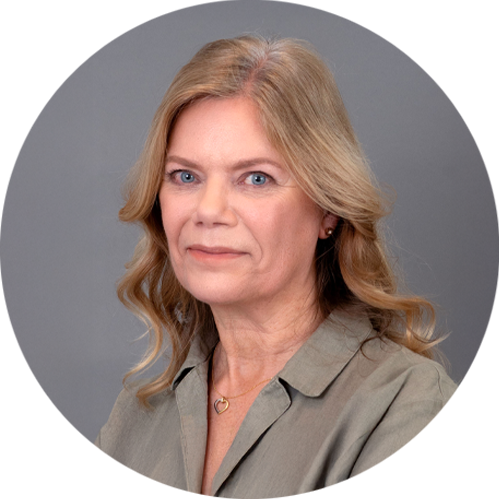
Assoc. Prof.
Anna Björkdahl
Bio
Anna is an Associate Professor and researcher at Karolinska Institutet, Sweden, with a background as a psychiatric mental health nurse. She currently works as Clinical Development Manager at Psychiatry South Stockholm, where she bridges research and clinical practice. Her work centres on preventing and managing violence and coercion in inpatient psychiatric care, approached from a nursing perspective. In recent years, she has published several papers on Safewards, drawing on both quantitative and qualitative methods and naturalistic research designs grounded in real-world clinical settings.
Abstract
What Really Makes Safewards Work? Identifying the Active Ingredients for Fidelity, Learning, and Impact
Safewards has become one of the most widely adopted interventions to prevent conflict and containment in psychiatric care, yet we still cannot confidently answer two fundamental questions: what exactly needs to happen for Safewards to work as intended, and how is Safewards actually implemented in practice?
This gap exists partly because we have lacked a robust tool to assess implementation fidelity, making it challenging to understand outcome variation, facilitate cross-site learning, or ensure Safewards is delivered as intended. At the core of this challenge has been an insufficiently articulated understanding of the active ingredients necessary for the ten Safewards interventions to achieve their intended effects. Without this knowledge, replication, refinement, and effective implementation are compromised, jeopardising both clinical quality assurance and scientific rigour.
This keynote presents the on-going development process of the Safewards Implementation Fidelity Tool (SIFT), and the identified active ingredients of Safewards. Through an international Delphi process, expert consensus identified the active ingredients for each intervention as well as measurement levels, informed by contemporary fidelity theory. As a next step, the SIFT was pilot-tested with frontline psychiatric staff and refined to ensure clinical relevance and feasibility.
The tool comprises 48 active ingredients with established measurements across all ten interventions. The number of ingredients, ranging from three to seven per intervention, captures the sophistication of Safewards and of high-quality mental health nursing practice. The SIFT is currently undergoing international psychometric validation.
Beyond measurement, the active ingredients may serve as a practical compass for implementation, helping clinicians, managers, and researchers understand, communicate, and sustain the core purpose of Safewards, particularly relevant at a time when growing popularity brings both opportunities and risks of drift. This work establishes a foundation for the next generation of Safewards implementation, one grounded in clarity, shared understanding, and the capacity to learn from what truly works.

Hamilton Kennedy
Bio
Hamilton Kennedy is a social worker, PhD candidate and ex-patient of mental health services based in Melbourne, Australia. Hamilton’s PhD explores the experience of being labelled delusional and the tensions that can arise because of this between people and services. Their work focusses on finding new ways of relating and responding to people experiencing mental health challenges. With experience of working in and experience of public mental health services, Hamilton is interested in approaches that reduce conflict that move away from coercion, through the development of relationship, understanding, and collaboration.
Abstract
Beyond Containment: Deepening Safewards Through Relationship
This keynote begins with insider knowledges. Knowledge and experience of being restrained and harmed, of witnessing harm, and of working within systems that are trying to balance care and control. From these reflections, it asks what becomes possible when we take seriously the meanings people give to their distress, and how this can extend the work of the Safewards Model.
This keynote presentation brings together this insider knowledge, research, and clinical practice to explore the challenges and opportunities of implementing Safewards in psychiatric settings. Drawing on reflections of being subjected to, and witnessing, restraint, coercion, and harm within psychiatric services, the presentation considers how Safewards can be extended and deepened in practice.
Safewards represents a shift in how conflict and containment can be understood and addressed. With its focus on relationships, mutual understanding, and the dynamics of inpatient environments, it demonstrates that restrictive interventions are not inevitable. However, this presentation argues that the impact of Safewards can be strengthened by attending more closely to the meanings people give to their experiences, particularly in moments of heightened distress.
Integrating findings from doctoral research on experiences labelled as delusional, the presentation introduces ways of engaging with unusual beliefs and experiences as meaningful, rather than as problems to be corrected or managed. When these meanings are overlooked, interactions can become strained and escalate towards conflict. When they are engaged with respectfully, opportunities for connection and shared safety emerge.
The presentation will also provide practical guidance for implementing Safewards in moments of high distress. This includes preventative strategies, as well as ways of responding to emerging conflict while maintaining relational engagement under pressure. It suggests that reducing restrictive practices involves not only the application of specific interventions, but also the cultivation of practices and understandings that make connection more possible, and conflict and containment less likely.